

By Eleogu Lucky Nkem, PhD, FCAI, MNIIA
The celebration of ASA Day 2025 transcends festivity and cultural display; it stands as a profound moment of reflection on the identity, heritage, responsibilities and future of the Asa people within Ukwa West Local Government Area and Abia State at large.
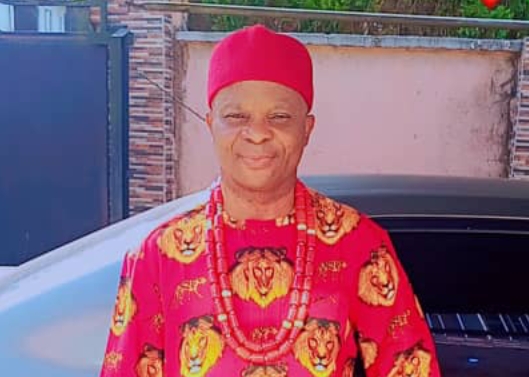
Addressing distinguished listeners of BCA Radio and sons and daughters of Asa land, Dr. Eleogu Lucky Nkem described the occasion as an intellectual and moral opportunity to interrogate the intersection of culture, natural resources, leadership and development.
Culture, he noted, is the soul of a people. Drawing from the classical definition by Edward B. Tylor, culture encompasses the totality of knowledge, beliefs, morals, customs, and social practices acquired by members of a society.
By this understanding, Asa is not merely a geographical entity but a living cultural system sustained by shared values, collective memory and communal ethics.
Historically, Asa society was rooted in communal land ownership, reverence for elders, inclusive dialogue, and consensus-driven leadership. Land was perceived not as a commodity but as an ancestral trust preserved for future generations.
This worldview, Dr. Eleogu explained, aligns with Aristotle’s idea of the polis as a moral community whose ultimate aim is the good life anchored in justice, harmony, and mutual respect.
However, Asa’s traditional values now confront a modern and complex reality: the discovery and exploitation of oil and gas resources within its territory. This development has repositioned Asa as a strategic socio-economic zone within Abia State and the Niger Delta. Yet, history offers sobering lessons.
Resource abundance, without ethical governance, often breeds conflict, inequality, and underdevelopment. Philosophers like Jean-Jacques Rousseau warned against the dangers that arise when collective ownership gives way to narrow individual interests.
Dr. Eleogu referenced the widely discussed concept of the resource curse, where resource-rich communities paradoxically suffer deprivation due to poor governance and social fragmentation.
Citing development economist Amartya Sen, he stressed that true development lies not in wealth accumulation alone but in the expansion of human freedoms – access to education, healthcare, infrastructure, security, and dignity. For Asa people, oil and gas must translate into tangible social benefits, not rivalry, exclusion, or elite capture.
Central to this transformation, he argued, is the harmonization of interests. Harmonization demands deliberate cooperation among traditional institutions, political leaders, community stakeholders, and development agencies.
It requires subordinating personal ambitions to collective destiny. Drawing from Plato’s Republic, Dr. Eleogu emphasized that justice and stability emerge only when all parts of society work in harmony toward a common purpose.
This principle resonates deeply within African philosophy, particularly the concept of ubuntu – “I am because we are.” The strength, survival, and relevance of Asa, he maintained, depend on unity, restraint, and a shared developmental vision. Disunity weakens collective bargaining power, while cohesion amplifies Asa’s voice in engagements with government and external actors.
Within this philosophical framework, Dr. Eleogu appraised the interventions of the Abia State Government under Governor Dr. Alex Chioma Otti, OFR. He noted that governance derives legitimacy from fairness, justice, and responsiveness to citizens’ needs. In resource-bearing communities, fairness is measured by visible state presence and sustained infrastructural development.
He commended the restoration of electricity across Ukwa West, including Asa communities, describing it as a transformative intervention that restores productivity, security, and confidence.
Similarly, the rehabilitation of the Owaza-Umudiobia-Obehie road axis was highlighted as a strategic move that reconnects Asa land to economic networks and positions it as a vital link to the Abia Industrial and Innovation Park (AIIP).
Dr. Eleogu also acknowledged the importance of inclusive leadership, noting the strategic positioning of Asa sons in key governance and development roles – Ukwa West Local Government under Pastor Dike Nwankwo, the Ministry of Environment under Hon. Philemon Ogbonna, and ASOPADEC under Ven. Dr. Onyeike Joshua. This approach, he said, reflects the principle of subsidiarity, which strengthens accountability, participation, and trust when decisions are made closer to the people.
Nevertheless, he cautioned that leadership proximity must be matched with ethical responsibility. Public office holders, particularly in resource-rich areas, bear a moral obligation to rise above factionalism and ensure inclusive, transparent, and sustainable development, especially for communities like Owaza, the highest oil- and gas-producing area in the state.
Ultimately, Dr. Eleogu emphasized that no government effort can succeed without the collective cooperation of the people. Unity, he stressed, is not sentimental but strategic. Asa people must see one another as co-custodians of a shared destiny, not competitors for advantage. He further called for renewed collective resolve to reclaim political relevance, including the recovery of the House of Representatives seat lost over the years.
In conclusion, Asa Day 2025 marks a defining moment in the people’s history. With a rich cultural heritage, abundant natural resources, renewed government attention, and indigenous leadership in strategic institutions, Asa stands at a crossroads. The path forward, Dr. Eleogu asserted, lies in integrating culture with modern governance, harmonizing interests for stability, and transforming resource wealth into generational prosperity.
“If Asa remains culturally grounded, philosophically guided, and development-oriented,” he concluded, “our land will not only produce oil and gas; it will produce justice, unity, political relevance, and sustainable progress.”
ASA Nma nmanu! Kelewe nu!