

By Onyinyechi Obi
For decades, sports in Nigeria have been viewed through a narrow lens, an arena for talent discovery, a source of fleeting glory, and, too often, a dead end for athletes once their competitive years expire.
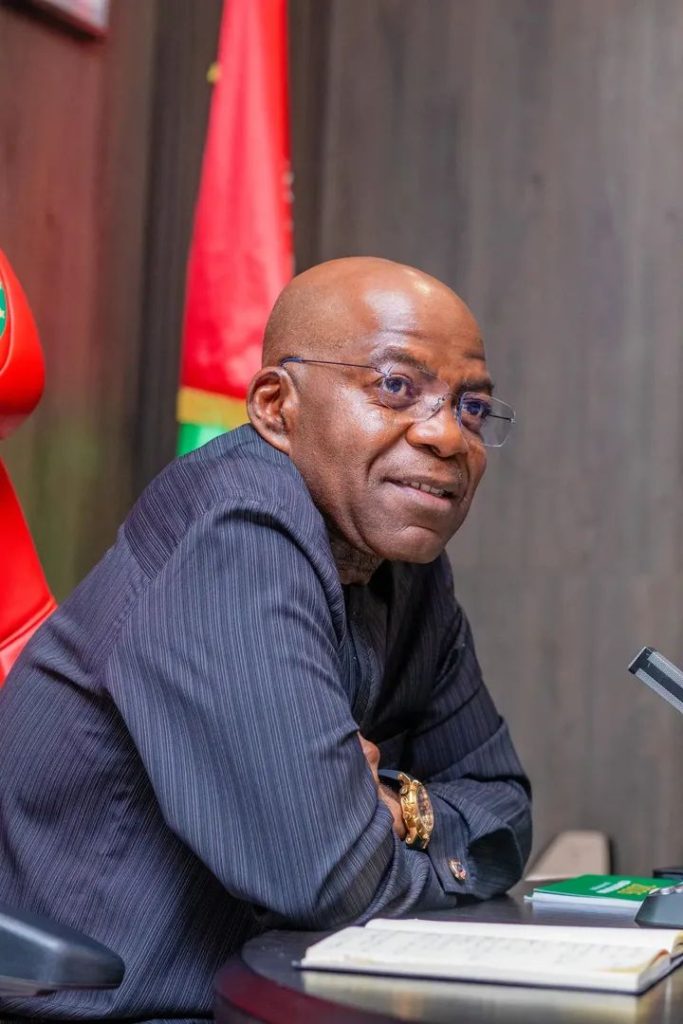
Under the administration of Alex Otti, however, Abia State is quietly rewriting that narrative. Sports is no longer just about who runs fastest or jumps highest; it is being strategically repositioned as a driver of youth empowerment, academic advancement, industrial growth, and sustainable economic diversification.
At the heart of this transformation lies a deliberate shift from passive participation to an integrated sports ecosystem. Nowhere is this more evident than in the state’s pioneering academic intervention. Through a strategic partnership with Ogbonnaya Onu Polytechnic, Abia has launched a National Diploma programme in Sports Management, with its first cohort already matriculated.
The initiative is grounded in a simple but critical reality: sporting careers are inherently short and uncertain. By equipping participants with formal training in sports administration, business management, therapy, and event logistics, the state is enabling athletes to transition into sustainable second careers.
It is a forward-thinking model that treats sports not as a terminal pursuit, but as a launchpad for lifelong professional development.
Complementing this academic pillar is the ambitious Abia State Special Sports Economic Zone (ASSEZ), anchored on a Special Purpose Vehicle partnership with Sports Nigeria.
This initiative targets one of Abia’s most underutilized strengths, the ingenuity of Aba’s artisans. For years, local leather workers, footwear producers, and fabricators have operated largely within the informal sector, often producing goods that are rebranded abroad. ASSEZ seeks to formalize and scale this capacity, channeling it into the production of football boots, training kits, gym equipment, and specialized sports merchandise.
With structured partnerships, technical training, and improved market access, Abia is positioning itself to compete across Africa, with significant implications for job creation, increased tax revenues, and import substitution in a sector long dominated by foreign manufacturers.
This policy-driven approach is already yielding results on the competitive front. Abia has emerged as Nigeria’s hub for Teqball, having hosted the 2024 World Championship qualifiers in Aba and later dominating the inaugural National Teqball League, “Aba 2026.” The state also recently launched its first-ever Tertiary Education Sports Fiesta, bringing together over 1,000 students from 13 institutions in a five-day multi-sport event, complete with a symbolic torch-lighting ceremony aimed at reviving inter-campus competitions.
In addition, Abia has distinguished itself as a leader in inclusive sports development. The state has hosted major para-sport events, including the 5th National Open Para-Badminton Championship, the 1st Abia Para-Badminton International Championships, and the All African Para-Badminton Championship, sanctioned by the Badminton Confederation Africa and the Badminton World Federation.
Crucially, the administration has ensured that sporting excellence translates into tangible opportunity. Governor Otti’s decision to offer employment to medal-winning athletes from national and international competitions marks a significant shift in athlete welfare policy, reinforcing the idea that success in sports should lead to long-term stability, not uncertainty. On the infrastructure front, the construction of the Abia State International Stadium—a 40,000-capacity ultra-modern multipurpose complex—signals a bold commitment to providing world-class facilities capable of hosting global events.
Beyond elite competition, the government is actively reviving grassroots sports through initiatives such as the Governor’s Secondary School Unity Games, a statewide annual school sports festival, and Abia Soccer Fest. These programmes aim to identify talent early while broadening participation beyond football. Sustainable sports development must begin at the grassroots, and by exposing students to diverse disciplines, the state is cultivating a new generation of athletes, administrators, and enthusiasts.
What sets this model apart is its emphasis on sustainability. Medals may gather dust, but industries endure. By integrating competitive excellence with academic certification, industrial development, and strategic partnerships, Abia is building a sports economy designed to outlast any single generation of athletes.
The Sports Management programme is producing future administrators and entrepreneurs; ASSEZ is strengthening the state’s manufacturing base; and consistent hosting of major events is cementing Abia’s position as a regional sports hub.
Governor Otti’s sports strategy may not always command national headlines, but its impact is structural, scalable, and deeply aligned with the realities of youth development in modern Nigeria. It offers a compelling blueprint for other states—one that treats athletes as long-term assets, artisans as industrial partners, and sports as a viable economic sector rather than a recreational afterthought.
As the first cohort of sports management students settles into their classrooms, as artisans in Aba scale up production, and as the state continues to excel in competitions from Teqball to para-badminton, one thing is clear: Abia State is not just playing the game—it is redesigning the board.